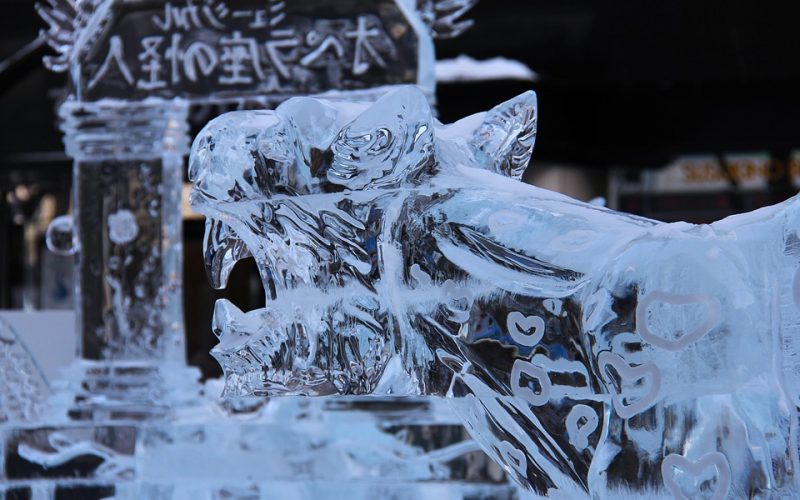
Mini ice sculptures are small-scale frozen artworks, typically ranging from a few centimetres to about 30 centimetres in height. Unlike their grand, banquet-hall counterparts, these compact creations are designed for intimate settings — dinner parties, cocktail garnishes, wedding tablescapes, and even home displays. Carved from clear blocks of purified ice, they can take the form of animals, geometric shapes, flowers, or bespoke designs tailored to a theme or occasion.
A brief history of ice carving
Ice carving has existed for centuries. In 17th-century China and Russia, elaborate ice structures were built during winter festivals, blending utility with artistry. By the 19th century, professional ice carvers were a fixture in grand European hotels, sculpting centrepieces for lavish banquets. The craft eventually crossed into mainstream hospitality, becoming synonymous with upscale events and formal dining. What's changed recently is the scale — and who's doing it.
Why mini sculptures are having a moment
Several factors have converged to push mini ice sculptures into the spotlight. Social media plays a significant role; a perfectly lit ice swan cradling a cocktail glass is precisely the kind of visual that performs well online. As food and drink presentation has become increasingly theatrical, bartenders and event stylists have turned to ice as a medium that is simultaneously functional and striking. It chills a drink, frames a table setting, and melts away — leaving no waste behind.
There's also a growing accessibility to the craft. Compact refrigeration tools, silicone moulds, and entry-level carving kits have made it easier for enthusiasts to experiment at home. Where ice sculpting once required industrial equipment and years of professional training, a hobbyist can now produce a recognisable form with patience and a decent set of chisels.
The artistry behind the ice
Creating a mini ice sculpture is more technically demanding than it might appear. The ice must be frozen slowly and consistently to achieve the clarity that allows light to pass through it cleanly. Any trapped air bubbles or cloudiness can obscure fine details. Carvers work against time — the ice begins to melt the moment it leaves the freezer — which demands both speed and precision. For intricate commissions, some artists use CNC (computer numerical control) machines to etch the initial form before finishing by hand.
Practical uses beyond aesthetics
Mini ice sculptures have found a firm footing in the cocktail world. Many high-end bars now offer bespoke ice programmes, where a single carved sphere or diamond-cut cube is treated as integral to the drink as the spirit itself. Beyond beverages, mini sculptures serve as place card holders, centrepieces for grazing boards, and decorative elements at product launches. Their temporary nature — the fact that they will eventually disappear — adds an element of theatre that permanent decorations simply cannot replicate.
The future of frozen art
Interest in experiential dining and bespoke event design shows no sign of slowing. As consumers continue to seek out moments that feel considered and memorable, mini ice sculptures offer something genuinely distinctive. Artists are experimenting with embedding botanicals, edible gold, and even LED lighting within the ice to add further visual depth. Some are exploring flavoured ice as a medium, blurring the boundary between sculpture and food. What began as a grand tradition reserved for palace banquets has quietly found a new life on bar tops, dining tables, and social media feeds — one small frozen masterpiece at a time.